The post Playing the First Notes of Your Solo appeared first on DoctorFlute.
]]>Start with the Sound You Want
Your goal is to have the first note come out with a fabulous tone, vibrato, liveliness, and color. The first note tells the audience what’s coming next.
We all know what we want to sound like when we perform. To get there, it’s important to start there.
But sometimes we think that the first note is too short to put on some vibrato. Perhaps we don’t consciously decide to not put on vibrato. It just doesn’t happen.
Always ON Vibrato
Here’s how to make sure that the very first note has presence:
Decide now, that every time you pick up your flute, it’s as if a switch has flipped and your vibrato is turned on. Your vibrato default setting is “ON.”
Convince yourself that your vibrato setting is always on. Then when you start a piece, the first note comes out with vibrancy and life. Your sound will be lively from the start.
If I start without vibrato, it starts off dead. There’s no life to that first note. But the quality when it has a liveliness is amazing.
When that first note is not long enough to have vibrato, you can still decide what you want to do with it. You can know exactly what tone you are looking for. You can play around with embouchure placement. You can move it around on your lip. You can adjust that angle of your air across the lip plate strike edge. Figure out where you get the best tone. Then every time you pick up your flute to play that again, you have the makings of a lively tone.
Lively Start
Then, even though it’s not long enough to hear vibrato, you’ll start with that tone having liveliness and vibrancy. It’s going to start alive. The audience can tell that you’re excited for something that’s coming.
Are there times where I might not want vibrato? Sure. The opening of Afternoon of a Faun. Most flute players start with no vibrato. Part of the reason in this opening is to conserve air. You know what I mean if you’ve played this piece. But it also gives you the ability to change the colors. You’re manipulating your vibrato and that opening note, but you’re doing it consciously. You’re doing it because that’s the color you want. That’s what you want to create.
You might also start the Fauré Fantaisie without vibrato, as many intermediate flutists often do. But it’s more often that it’s just not even thought about what you want to do with that note.
It just starts with no vibrato without any rhyme or reason. Now, I might want to start off with no vibrato, but I’m going to think about it. What if I were to start with vibrato?
We need to start with vibrato unless it’s a conscious thought to not. But I think it’s more often than not, we start with no vibrato, with no real reason, except that you just didn’t put vibrato on it.
Start with your vibrato going. Your motor is going right off the bat.
Because when you start with that vibrato, it has a life and movement, and it’s going somewhere right away.
Record Yourself
Record yourself when you’re practicing for a performance. Identify how you want to set up that first note for what is going to come. Determine whether that first note has a fabulous tone and vibrato and liveliness and color. Does it tell your audience what’s going to be coming?
The first note should make the audience sit up in their chairs, on the edge of their seats, excited for what is to come.
Listen to yourself. Plan that first note with just a little bit more thought. And it can change your whole piece. By doing that, it really can change your whole piece because you now have a different attitude about the whole piece.
Focus on that first note!
Have fun!
DoctorFlute
Watch me demonstrate this using:
Mozart Flute Concerto
Fauré Fantaisie
Jade from Ferroud’s Three Pieces
Playing the First Notes of Your Solo – FluteTips 186
FluteTips 84 Adding Vibrancy to Your Tone on the Flute

Producing a Lively Sound on the Flute – FluteTips 115
The post Playing the First Notes of Your Solo appeared first on DoctorFlute.
]]>The post What Do You Say After a Performance? appeared first on DoctorFlute.
]]>“Oh, great job!”
And inside you're thinking:
“Ah, I wasn't very good. I messed up here. I messed up there. I didn't do this right. It's not the best I could have done. The piano rushed!”
But what do you say to that person that is complimenting you and is so eager to see you after a performance? Well, let me tell you that the only answer to that is:
“Thank you. I enjoyed playing that too. It was great fun. I'm glad you enjoyed it.”
Always. Always, always affirm the person that is giving you this compliment and then talk about how much fun you had performing it. You don't want to give away all your secrets, right then. Don't say:
“I was really nervous or I flubbed up here, or, Oh, you don't know that the piano player and I got off from each other or whew, that was bad!”
You must say “Thank you. I enjoyed performaning.” Find a way to affirm the person giving you that compliment and don't take away from their pleasure of hearing you.
I'm sure it's happened to everybody when someone has said, Oh nice hair and you say, well, I just rolled out of bed. They are probably very genuine that they think your hair looks really good but to you it's a bad hair day. You didn't do anything with it and it's not the way you like it to be. It's the same way with a performance.
People can enjoy a less then perfect performance, because everybody hears different things. Every persons takeaway is different from yours. You have such familiarity with every single note and an intimate knowledge of each of those pieces. But, your audience, the vast majority of the audience, doesn't know those pieces the way you do. If they enjoyed it, then you need to say thank you and stop there. No buts. No I wishes. No anything about the secrets that happened in your head with your fingers or on the stage. You're going to tell them how much you appreciate their compliment.
It's okay to look at your teacher standing in the back of the crowd and lock eyes with them and the two of you can know that something occurred. But your audience doesn't know that. There have certainly been times when I performed a piece that was not to my liking. One prime example was a recital that began with a piece called Valentine trills from a book of musical Valentines that Carol Wincenc commissioned. The short piece that I opened the recital with was all trills! Everything was a trill in that little Valentine.
Maybe in hindsight, that wasn't the best first piece to settle my nerves in a performance. I probably should have started with something else, and then moved to that piece. I definitely showed that I was nervous. I thought that the trills weren't even, that they didn't come out and come across to the audience the way I wanted them to. But afterwards people said that I did a great job. They loved that piece. In my mind it was not good. However, later when I listened to that piece on the recording, I thought, wow, nothing, nothing that was going on in my head about what was wrong with that performance came out in that recording, nothing.
I thought, who is that person playing? Because it can't be me. That really taught me a lesson. The things we hear in our head sometimes is not reality. It's not what the audience hears. It may even not be what your flute teacher hears and you have to accept that and that's okay. That's okay. We all have our demons. We all go home after a performance thinking that some part of it wasn't good. I could have done this or that better. All those things go on in our heads.
But we need to accept that we played music. People enjoyed it. So, we should enjoy it too. Accept those compliments. Know that they're meant genuinely and feel good about that compliment. Don't feel bad about something that may or may not have gone astray.
Now, yes, there's those times where it was a real bomb and perhaps everybody knows because you were doing a piece for memory and you had a memory slip.
But you know what? Things like that don't ruin an entire recital. You and your teacher maybe are the only ones that are going to be the ones that talk about it afterwards. No one else remembers that. They only remember the good. I think that's a lesson for life to remember the good, keep that in the forefront and enjoy performing. Don’t think about the mistakes that you have made.
The next time you perform and you don't think things went terribly well, but someone comes up and tells you how wonderful it was, that they loved your performance, your sound was great and everything else, you smile and say, “thank you. I loved performing too and I'm so glad you enjoyed that performance.” And leave it at that. Take the things that you want to say about it away, put them in the back of your head and don't tell!
Have fun!
DoctorFlute
Watch my video of this: FluteTips 93 What Do You Say After a Performance
The post What Do You Say After a Performance? appeared first on DoctorFlute.
]]>The post Fixing 3 Double Tonguing Problems appeared first on DoctorFlute.
]]>I find that there are three major problems with double tonguing that give my students problems whether they are high school students, college students or professionals. These double tonguing problems are universal and the fix can be applied to any solo. All you have to do is determine which problem is yours, then get to work fixing it.
Problem #1 The Hen Peck
Problem #2 Uneven "ta ka"
Problem #3 Fingers Move Faster Than the Tongue
#1 The Hen Peck Problem
Now, the first problem that I see with students is the Hen Peck. Most often this is the biggest problem with a student's double tonguing. I have seen it more often than not, when the person comes to me for lessons and they have a piece with double tonguing. This problem is when the air doesn't flow through the "ta ka". The result is that the tongue stops the sound, and each tongue is short and clip. The musical line becomes interrupted. Thus the Hen Peck sound.
The Fix
The first thing to do when trying to fix this problem is play through the passage slurring all the way. This gives your ear the sound of the musical line. You hear all the notes connected and beautiful. It's important to understand that what you hear when slurring is the way it needs to sound when you double tongue. You can't break up the musical line just because you are double tonguing. Recognize that when you slur, your air is moving through the passage, and your support is steady. Transfer this to the double tongue. Push your air pressure through the "tktk" so that the sound isn't clip. Copy the musical line sound that you heard when you slurred. Now it makes musical sense. A benefit is that it is so much easier and more comfortable to play this way.
#2 The Uneven "Ta Ka" Problem
The second problem I hear is the uneven tongue. This occurs when the t is fine but the k is uneven. Usually it's not the ta because you've used the "ta" your whole flute life, and now you have to add the Ks onto it. When you speak tktk it can be very even. But when you put the flute up, it miraculously becomes uneven. How does that even work?!!! You would think that if you can say it evenly, then you should be able to do the same on the flute. But alas, sometimes this is just not the case.
The Fix
The first thing to do is to speak the tktk in the same tempo as the passage. Make sure the tongue is very light. The t is very forward, making the k more forward. Keep it light and forward on the flute as well. The key to getting this even is to switch the t and k around. While you usually play tktk you will now play ktkt. Trust me it works. Make this way of double tonguing just as good as the original way. In other words, pretend that this is the method you must use from now on. You need to believe that this is your method. You have to be all in, because only then will your k muscle become just as strong and coordinated as the t. This really works! FYI it is absolutely the best way to fix triple tonguing issues as well. Backwards to go forwards!
#3 Fingers Move Faster Than the Tongue Problem
Whenever you're having trouble with your double tongue, and you feel "I've got it, I should know it. I've worked on it!" But it still doesn't come out smoothly. It's always because the fingers are faster than the tonguing. The tongue and fingers have come out of sync with each other, and you need to get them so that they're traveling the same path again.
The Fix
It's never because the TK is rushing. It's the fingers that are the problem. This means that you need to go back and woodshed slowly. Go back to the methods that you used to learn it in the first place. Use every articulation in your Taffanel and Gaubert book making sure that when using any articulations with tonguing that you always use double tonguing, even when slow. Use your metronome each and every time you practice this passage. That's all you need to do to fix this problem. It seems a simple solution, but it takes time. Remember it's not going to be fixed all of a sudden. It will take time.
Those are the three problems that will fix 99% of double tonguing issues. Now, analyze which one is your problem (or is it all 3?) and go about fixing it.
Have fun!
DoctorFlute
Watch me demonstrate this Fixing 3 Double Tonguing Problems - FluteTips 92
FluteTips 82 Getting Better Low Notes with Taffanel & Gaubert Number 8

FluteTips 86 Bending Your Pitch UP
The post Fixing 3 Double Tonguing Problems appeared first on DoctorFlute.
]]>Have you ever studied Cécile Chaminade's Concertino in D Major Opus 107?
Learn with me as I teach through the Concertino in 6 parts, highlighting areas that might be technically and rhythmically difficult.
In this first video I will cover only the first 15 measures. This is the opening to the whole piece. It sets the tone and it's so beautiful and lovely.
Don’t Rush the Triplets
When students play this opening for me, one of the most common errors they make is in the rhythmic timing of the duplets contrasting with the triplets. The first measures begin with eighth and then immediately move to triplets and back to eighths. It's back and forth and back and forth.
Almost always if there's a problem, the triplets are played too fast, they are rushed. The best way to conquer this is to practice these measures with a metronome. Listen very carefully. Even with a metronome they can be played wrong. Don't try to be musical with it just yet. Learn the rhythm carefully first. Once you feel that you have it down then listen for the phrasing and nuance.
Don’t Start Too Softly
Another mistake that flute players make is beginning the piece too softly. If you begin too softly then most likely you are sacrificing tone. Use the mf to your advantage. If you play mf as it says then you can bring out your tone. It will help you feel like you are beginning strongly. It makes it just so lovely to start off with a beautiful not overly loud sound but just a nice comfortable mf sound.
Lets talk tenuto. Sometimes when students play these tenuto notes they misinterpret what that really means. It does not mean to change the rhythm. I like to think of tenuto notes as sticky notes. I want to think of these notes as if I can't get off them. I want to play them not too short or too long but elongated and sticky.
Sticky Tenuto
If you hold the tenuto too long, then you will change the rhythm. But, it you hold the tenuto too short, then they are not special.
That covers the opening. Now lets continue and look at the dynamics. There are a lot of them.
In m. 6 it begins with a diminuendo. That causes some consternation. Because at the end of the opening phrase in m. 5 which was your opening phrase, you've tapered and gotten softer. Now you must come in louder than when you ended so that you can dim. bigger than that.
Articulate!
Articulation is very important. I haven't discussed this yet but it is important as we have come to the time in musical history that composers began to write in their own dynamics, which up to this point were either non-existent or sparse. So, now go back to the beginning put all the articulation in, up to this point.
I bet your playing is really beginning to sound nice, isn't it?
Beginning in m.11 the opening motive is heard again, except this time it is higher. That makes it much more intense and more dramatic. Use that drama to shape these last few measures to m.15.
That's your opening through measure 15. How is it going for you? Are you feeling like the measures are taking shape? If not, do them again and work harder at expression.
Work on that opening. Explore your range of dynamics and articulation. Make sure that there's a nice tah where there's supposed to be a tah. Whatever's written here was written by the composer. So, put those in. And compare your duplets with your triplets to make sure that you're not short-changing the triplets by rushing through them.
That's your 1st 15 measures.
Have fun working on Chaminade.
DoctorFlute
Watch me demonstrate this:
Learn Chaminade 1st 15 Measures Cécile Chaminade Flute Concertino in D Major Op 107
Learn Chaminade mm 15-30 Cécile Chaminade Flute Concertino in D Major Op 107
Learn Chaminade mm 33-70 Cécile Chaminade Flute Concertino in D Major Op 107
Learn Chaminade The Vivo Cécile Chaminade Flute Concertino in D Major Op 107
Learn Chaminade The Cadenza Cécile Chaminade Flute Concertino in D Major Op 107
Learn Chaminade The Presto Cécile Chaminade Flute Concertino in D Major Op 107
The post Learn Chaminade Concertino 1st 15 Measures appeared first on DoctorFlute.
]]>The post New Years Goals appeared first on DoctorFlute.
]]>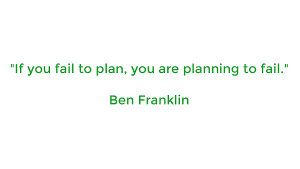 We all set personal goals in the new year, right? But do you have flute goals?
What are your flute goals for 2018? What are you dreaming about doing, performing, achieving?
My Flute Goals:
- Fill in my performance schedule.
You have to work at scheduling gigs. They don’t just fall into your lap. - Finalize the quartet program and plan recitals.
This year it was my pleasure to form a flute quartet comprised of 2 of my former students who have graduated with flute degrees, and a current student whom I’m helping prepare for grad school auditions. So far, we’ve been playing through music to see what will work on a program. As soon as we schedule a recital that will create the pressure needed to knuckle down and work on the nitty-gritty. - Determine the best time of day to write for my flute projects and stick with it.
Many have said that if you want to find the time to write, you must schedule it into your day. - Make a music video.
This one is a scary one for me. It is definitely out of my comfort zone. But, I would like to try my hand at it. It will also mean that I arrange a piece to play, and that isn’t my forte. I have something started and I am inspired to keep working on it. If I work on it too long then I get overwhelmed with what needs to be done. I have learned that short spurts will keep me going. - Have a planning session with my duo partner (percussionist) pick a program.
We’ve performed together several times over the last few years. - Increase rate of instructional videos.
I’ve been publishing a new FluteTips video every Thursday. I’d like to increase that pace with a new video training series that I’ve already started filming. - Feel overwhelmed!
(This is not a flute goal.)
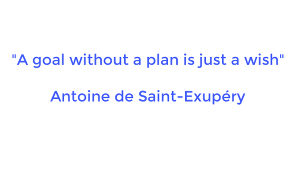 There are a lot of things to do and it can feel overwhelming.
But, I’m going to write these goals down in my planner, and work toward achieving them! In any case, even if I don’t achieve everything, I will achieve some of the goals and be further ahead for having set them.
Happy goal setting and planning!
Doctor Flute
The post New Years Goals appeared first on DoctorFlute.
]]>The post A New Program Is Like Christmas appeared first on DoctorFlute.
]]>
It’s Christmas ! ! ! ! ! !
 I absolutely love putting together a new recital program!
Searching out new music that fits a selected idea then receiving said music in the mail is one of those perks of being a musician. Those people who are not musicians can’t relate to that at all (those poor people).
I’m definitely a little late in the year to plan my program but it just wasn’t coming together. What I mean is, if I don’t have a central theme from which to center my pieces, then I find it difficult to put my program together. The result of this lack of programmatic focus is that I’m not comfortable picking a date for my faculty recital and thus end up feeling completely behind the proverbial 8 ball.
In today’s day and age I believe that you must really think about your program and its audience appeal. Audiences want to relate to what you are performing. If you give them the classics, they will like it. But it might be ho-hum. If you play the music that is big in the flute world right now – late 20th and 21st century music – you might lose your audience. Well, you will lose your audience.
But if you pick a theme, then select a wide variety of music around that theme, you will have a much better chance of keeping your audience engaged the entire time as they listen to see how the pieces fit together.
I know that when you are in college, you rarely have the freedom to pick a program based on a theme – and rightly so. Typically, college flute majors must program based on a variety of styles and periods in music often with an ensemble piece mixed in. That is the way it has to be. Flute majors must get through a certain set of standard pieces so that they can teach these before they go off on their own. But for those that have the ability, let me encourage you to search out a program that fits your personality, style and theme.
Let me give you some ideas from programs that I have done in the past with success.
Program theme: Flute music with a Spanish flair
Les Folia d’Espanga Marin Marais
Histoire du Tango Astor Piazzolla
Sonata Latina Mike Mower
Vocalization Aguda Carlos Chavez (This work is WAY out there.)
Peruvian Dance Suite Alice Gomez (this piece is a real audience pleaser with 2 flutes, marimba, and bongo)
That was a fun program! You can also dress the part by wearing red and orange.
These days I like to perform chamber music. I think it is more enlightening for the audience to see and hear flute music that is not just me and piano or me alone. Lately, I’ve been performing with a percussionist who lives near me. I think this combination of either flute and marimba, or flute and percussion is quite an audience pleasing combination. It is not easy to find great music for flute and marimba/percussion. There is one problem with this particular chamber group: all the music is 20th or 21st C music with the tonality that ensues. To have a more varied program, we have pulled from the flute and guitar and flute and harp genres. Sometimes this works and sometimes it doesn’t. I just let my percussionist decide what he can and cannot do.
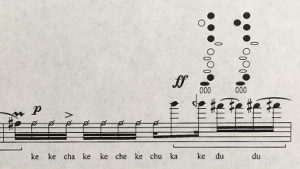 To add variety to my first flute and percussion recital, I played Zoom Tube by Ian Clarke. This added a great respite from the heaviness of the flute and percussion and kept with the theme because that piece uses the flute as percussion. Plus, it was so much fun to perform!
As an added benefit, I really had to get outside of myself, my limitations, my perceptions of what a prim and proper Eastman DMA would perform in a recital at the college where she is the Professor of Flute.
“Whoo Hoo!”
Histoire du Tango for flute and guitar works very well for flute and marimba and brought in the music and dance forms of South America to the program.
This past year I was not happy with the music that I had chosen. The program just didn’t come together and feel right. So I looked around for more. I came up with the idea that I wanted to bring in all the arts. So I stumbled upon music for 2 flutes and percussion/marimba that kept with this theme. Here is the run down:
Syrnx Claude Debussy
For this literary character my flute partner and I came up with our own arrangement of this piece, and the percussionist added some interesting sounds to add to the color. We also added a particular lighting arrangement to highlight the ambiguous nature of this arrangement.
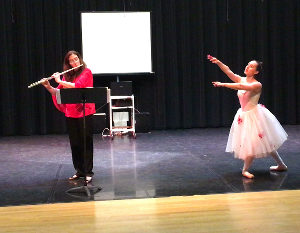 Danza de la Mariposa Valerie Coleman
It was a joy to perform this piece. I collaborated with a ballet dancer who depicted this piece in a beautiful way. It was such a visual display of this piece. If you get a chance, program a piece for you and dancer. It is a wonderful experience. I’m trying to figure out what to do next! Here’s a link to one of our performances of Danza de la Mariposa.
Trio for 2 Flutes and Marimba Marco Schirripa
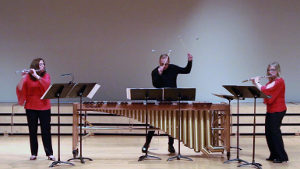 This is a fantastic piece for this combination of instruments. It didn’t necessarily fit our theme. But it was a great piece for our instrumentation. So, we decided to perform it anyway. I highly recommend this piece if you have a flute and marimba to perform with! Here’s a link to one of our performances of Trio for 2 Flutes and Marimba.
Elkarrizketa Robert Casado
This was a piece for 2 flutes and hand drum. The percussionist thought we could mix it up a bit more so he added different percussion to each variation of this piece. To add the arts to this piece we asked an artist to render what they thought this piece was about. The artist heard the piece and knew what the timing was but other then that they painted as they saw fit. We did this on 2 separate occasions and the paintings were very different both times. At the end of the recital the artist sold their painting to a member of the audience.
Stridulation for 2 flutes and Cello Nichole Chamberlain
I love this piece. We of course changed the instrumentation to marimba instead of cello. But it worked very well. This piece is a mixture of traditional notes and extended techniques. Since this is about the sound a cricket makes, I asked some elementary students to draw pictures of crickets. Then, we put together a slide show that ran while we performed this piece.
Peruvian Dance Suite Alice Gomez
We revisited this piece as the dance element in the movements lent itself to our theme of the arts. It is a beautiful and melodic piece that adds a totally different character to any recital. Try it!
Okay so these are just two samples of programs that I have put together in the last couple years.
What are you programming? Have you programmed any innovative recitals lately?
Let me know, I’d love to hear about it!
Doctor Flute
The post A New Program Is Like Christmas appeared first on DoctorFlute.
]]>The post Bruce Stark appeared first on DoctorFlute.
]]>Bruce Stark, American Suite for flute and piano

I truly don’t know why this piece hasn’t gotten more air time. This fine piece is not for the amateur. Both the flute part and the piano part are on the difficult side. Also, it’s not easy-peasy to put together. It takes some doin’ to get this into performance shape.
Let me tell you about this wonderful piece. Each movement is about some part of the USA, and Bruce Stark has depicted these areas beautifully in music. There is scintillating technique, jazz, blues, and wonderful melodic lines all set in a 20th century style.
The piece is perfectly accessible for the audience. There is something for everyone.
The first movement opens with a hoe-down and it’s rip roarin’. There are areas that hint of folk songs such as Little Brown Jug and the ending accelerates to the end.
Movement 2 is entitled The Bird and the Canyon. This movement has wonderful little bird calls at the beginning and then uses some extended techniques to depict wind in the Grand Canyon. The piano has a little action but it’s mostly about the flute showing the wind through the canyon.
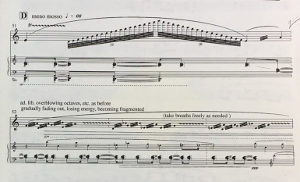
Moving on to the 3rd movement, the piece moves on to the west, deserts, glacial lakes, the Sierra Nevada mountain range, La Jolla, CA (known for its rugged coastline), and the Pacific Ocean. It’s has a quick tempo with a great interplay between the piano and flute.
Movement IV is a blues/slow jazz piece. You and the piano can do as much give and take as you see fit.
The last movement is Street Beats and depicts New York City in the morning. It flies just like the traffic. You need some fancy foot work, but it’s all worth it in the end as its intricate rhythm and technique conclude the work.
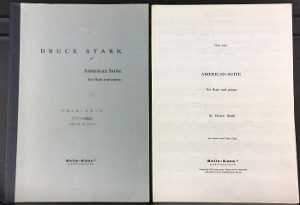 I can’t recommend this piece highly enough.
Program it for your next recital.
And let Bruce know you are doing it.
Have fun – you will!
Dr. Flute
The post Bruce Stark appeared first on DoctorFlute.
]]>