The post What is a Flute Bubble & How Do You Fix It? appeared first on DoctorFlute.
]]>When a bubble forms, it closes a key that you want open causing you to play a wrong note. You may not have even known that it was a bubble causing the problem, because it will eventually clear itself as you play.
It’s irritating nonetheless, especially when you’re performing.
I’ve had that happen. In fact, I was playing not too long ago and I went to trill (using my Ab key) and nothing happened.
“When you eliminate all other factors
The one which remains must be the truth.”
Sherlock Holmes
I knew my flute was not broken, it was not in need of a COA, there was no leakage due to torn pads. But all of a sudden it just stopped sounding like anything. So, I knew that it had to be a bubble.
What is a Bubble?
A bubble is simply breath condensation that gathers in your flute, collects around a key, then as you’re playing, creates a bubble, that in effect closes the key on its own. The easiest thing to do to get rid of a bubble is to blow it out.
What do you do with a bubble during a performance?
If you’re playing in an orchestra and you have a moment you can just take it and blow it out and it will pop out you then continue on as before. However, there’s not much you can do if you’re doing a recital and that happens. You just have to go on! Then at the end of the piece you need to go off stage and swab out your flute. I had that happen I was playing Syrinx and ending on that Db and there was a bubble in my key and it didn’t sound. So, the end of that performance was wrong. It ended the whole piece with a bubble in my Eb key. But that’s the way it is, that’s what happens in live performances and we move on from there.
But if you get a bubble the best thing to do is blow it out. It’s better to do that then to stick paper in it and dampen the paper because you could possibly damage your pad.
So, just give it a blow, like Clarinetists or oboes do when they get a bubble and everything will go back to being what it should be.
Have fun!
Doctor Flute
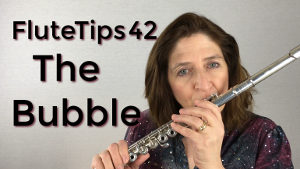
Watch me blow out a bubble: FluteTips 42 What if You Get a Bubble in Your Key?
Similar Topics:
Stop Flute Bobble with 4 Balance Points
The post What is a Flute Bubble & How Do You Fix It? appeared first on DoctorFlute.
]]>The post GIG the One You’re With appeared first on DoctorFlute.
]]>Or how about a harpist?
Or even another flutist?
That was my life for a time when we moved to a small area of rural New York State.
Yes, there’s an orchestra here that perhaps I could perform with. But you know what? The seats are filled and will remain so for the next 20 years.
So it seemed.
What was one to do?
I wasn’t teaching in my current college position yet. So, there were no readily available musicians. I wanted to perform, but I didn’t even have a pianist that was available to plan local recitals.
At first I bemoaned the fact that I didn’t have another flutist or a pianist or some of the main flute duo partners that composers write for. But I discovered is that if you look carefully, you will find good musicians hiding here and there in plain sight.
The performer that I eventually partnered with is a percussionist!
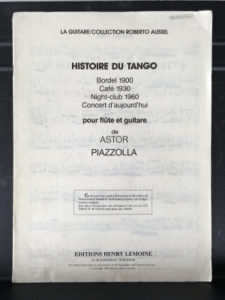
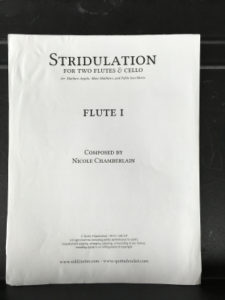
So, it’s all about expanding your horizons. If there is a musician near you, figure out how you can collaborate together even if it is not the typical partnership. Pick music that will suit you. Then arrange it for your group. For example, we performed Nicole Chamberlain’s great piece Stridulation for 2 Flutes and Cello but with 2 flutes and marimba, instead of cello (pictured above). It worked very well! We also performed Astor Piazzolla’s Histoire du Tango for Flute and Guitar with flute and marimba! That was really fun!
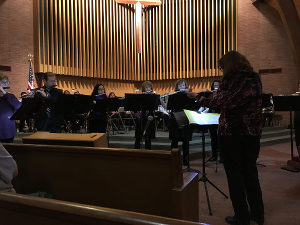
Before I found these musicians, I began teaching privately in the area. This brought me into contact with other adult flutists. So, I began a flute choir made of up my best high school students plus my adult students. These lay musicians love to play flute and I get to enjoy conducting. My Crystal City Flute Choir now includes piccolos, altos and bass flutes!
Additionally, I realized late last year that three former students of mine had moved back into the area for various reasons. They had all been flute majors at college and play at a high level. So, I asked them to form a quartet with me. I was glad that they jumped at the chance to keep performing.
Enjoy your pairing. It can be very exciting and satisfying.
If you are looking for more gigs, then search around you for fellow musicians that you can perform and collaborate with. Look carefully and think outside the box. You’ll be glad you did!
Have fun!
Doctor Flute
The post GIG the One You’re With appeared first on DoctorFlute.
]]>The post New Years Goals appeared first on DoctorFlute.
]]>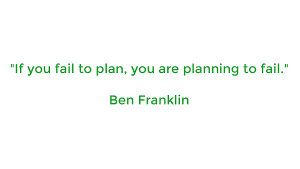 We all set personal goals in the new year, right? But do you have flute goals?
What are your flute goals for 2018? What are you dreaming about doing, performing, achieving?
My Flute Goals:
- Fill in my performance schedule.
You have to work at scheduling gigs. They don’t just fall into your lap. - Finalize the quartet program and plan recitals.
This year it was my pleasure to form a flute quartet comprised of 2 of my former students who have graduated with flute degrees, and a current student whom I’m helping prepare for grad school auditions. So far, we’ve been playing through music to see what will work on a program. As soon as we schedule a recital that will create the pressure needed to knuckle down and work on the nitty-gritty. - Determine the best time of day to write for my flute projects and stick with it.
Many have said that if you want to find the time to write, you must schedule it into your day. - Make a music video.
This one is a scary one for me. It is definitely out of my comfort zone. But, I would like to try my hand at it. It will also mean that I arrange a piece to play, and that isn’t my forte. I have something started and I am inspired to keep working on it. If I work on it too long then I get overwhelmed with what needs to be done. I have learned that short spurts will keep me going. - Have a planning session with my duo partner (percussionist) pick a program.
We’ve performed together several times over the last few years. - Increase rate of instructional videos.
I’ve been publishing a new FluteTips video every Thursday. I’d like to increase that pace with a new video training series that I’ve already started filming. - Feel overwhelmed!
(This is not a flute goal.)
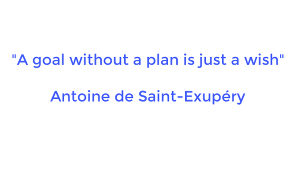 There are a lot of things to do and it can feel overwhelming.
But, I’m going to write these goals down in my planner, and work toward achieving them! In any case, even if I don’t achieve everything, I will achieve some of the goals and be further ahead for having set them.
Happy goal setting and planning!
Doctor Flute
The post New Years Goals appeared first on DoctorFlute.
]]>The post A New Program Is Like Christmas appeared first on DoctorFlute.
]]>
It’s Christmas ! ! ! ! ! !
 I absolutely love putting together a new recital program!
Searching out new music that fits a selected idea then receiving said music in the mail is one of those perks of being a musician. Those people who are not musicians can’t relate to that at all (those poor people).
I’m definitely a little late in the year to plan my program but it just wasn’t coming together. What I mean is, if I don’t have a central theme from which to center my pieces, then I find it difficult to put my program together. The result of this lack of programmatic focus is that I’m not comfortable picking a date for my faculty recital and thus end up feeling completely behind the proverbial 8 ball.
In today’s day and age I believe that you must really think about your program and its audience appeal. Audiences want to relate to what you are performing. If you give them the classics, they will like it. But it might be ho-hum. If you play the music that is big in the flute world right now – late 20th and 21st century music – you might lose your audience. Well, you will lose your audience.
But if you pick a theme, then select a wide variety of music around that theme, you will have a much better chance of keeping your audience engaged the entire time as they listen to see how the pieces fit together.
I know that when you are in college, you rarely have the freedom to pick a program based on a theme – and rightly so. Typically, college flute majors must program based on a variety of styles and periods in music often with an ensemble piece mixed in. That is the way it has to be. Flute majors must get through a certain set of standard pieces so that they can teach these before they go off on their own. But for those that have the ability, let me encourage you to search out a program that fits your personality, style and theme.
Let me give you some ideas from programs that I have done in the past with success.
Program theme: Flute music with a Spanish flair
Les Folia d’Espanga Marin Marais
Histoire du Tango Astor Piazzolla
Sonata Latina Mike Mower
Vocalization Aguda Carlos Chavez (This work is WAY out there.)
Peruvian Dance Suite Alice Gomez (this piece is a real audience pleaser with 2 flutes, marimba, and bongo)
That was a fun program! You can also dress the part by wearing red and orange.
These days I like to perform chamber music. I think it is more enlightening for the audience to see and hear flute music that is not just me and piano or me alone. Lately, I’ve been performing with a percussionist who lives near me. I think this combination of either flute and marimba, or flute and percussion is quite an audience pleasing combination. It is not easy to find great music for flute and marimba/percussion. There is one problem with this particular chamber group: all the music is 20th or 21st C music with the tonality that ensues. To have a more varied program, we have pulled from the flute and guitar and flute and harp genres. Sometimes this works and sometimes it doesn’t. I just let my percussionist decide what he can and cannot do.
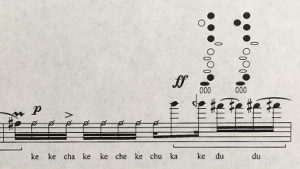 To add variety to my first flute and percussion recital, I played Zoom Tube by Ian Clarke. This added a great respite from the heaviness of the flute and percussion and kept with the theme because that piece uses the flute as percussion. Plus, it was so much fun to perform!
As an added benefit, I really had to get outside of myself, my limitations, my perceptions of what a prim and proper Eastman DMA would perform in a recital at the college where she is the Professor of Flute.
“Whoo Hoo!”
Histoire du Tango for flute and guitar works very well for flute and marimba and brought in the music and dance forms of South America to the program.
This past year I was not happy with the music that I had chosen. The program just didn’t come together and feel right. So I looked around for more. I came up with the idea that I wanted to bring in all the arts. So I stumbled upon music for 2 flutes and percussion/marimba that kept with this theme. Here is the run down:
Syrnx Claude Debussy
For this literary character my flute partner and I came up with our own arrangement of this piece, and the percussionist added some interesting sounds to add to the color. We also added a particular lighting arrangement to highlight the ambiguous nature of this arrangement.
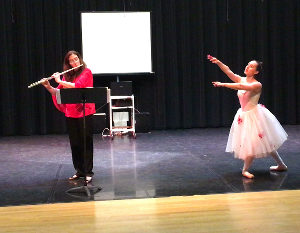 Danza de la Mariposa Valerie Coleman
It was a joy to perform this piece. I collaborated with a ballet dancer who depicted this piece in a beautiful way. It was such a visual display of this piece. If you get a chance, program a piece for you and dancer. It is a wonderful experience. I’m trying to figure out what to do next! Here’s a link to one of our performances of Danza de la Mariposa.
Trio for 2 Flutes and Marimba Marco Schirripa
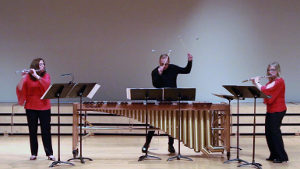 This is a fantastic piece for this combination of instruments. It didn’t necessarily fit our theme. But it was a great piece for our instrumentation. So, we decided to perform it anyway. I highly recommend this piece if you have a flute and marimba to perform with! Here’s a link to one of our performances of Trio for 2 Flutes and Marimba.
Elkarrizketa Robert Casado
This was a piece for 2 flutes and hand drum. The percussionist thought we could mix it up a bit more so he added different percussion to each variation of this piece. To add the arts to this piece we asked an artist to render what they thought this piece was about. The artist heard the piece and knew what the timing was but other then that they painted as they saw fit. We did this on 2 separate occasions and the paintings were very different both times. At the end of the recital the artist sold their painting to a member of the audience.
Stridulation for 2 flutes and Cello Nichole Chamberlain
I love this piece. We of course changed the instrumentation to marimba instead of cello. But it worked very well. This piece is a mixture of traditional notes and extended techniques. Since this is about the sound a cricket makes, I asked some elementary students to draw pictures of crickets. Then, we put together a slide show that ran while we performed this piece.
Peruvian Dance Suite Alice Gomez
We revisited this piece as the dance element in the movements lent itself to our theme of the arts. It is a beautiful and melodic piece that adds a totally different character to any recital. Try it!
Okay so these are just two samples of programs that I have put together in the last couple years.
What are you programming? Have you programmed any innovative recitals lately?
Let me know, I’d love to hear about it!
Doctor Flute
The post A New Program Is Like Christmas appeared first on DoctorFlute.
]]>