Have you tried as many portable music stands as I have?
Did you find that they were either too heavy, too flimsy or pinched your fingers?
Well, I finally found a portable music stand that measures up. I highly recommend the Capsule Music Stand by KraftGeek. Overall, it has an innovative design that is both compact and light, yet functional and sturdy.
I’ve been using this stand regularly for several months. So, I made a video to show you how it works.
Please watch as I demonstrate the Capsule Music Stand and a few extra gadgets you may want to consider.
Here are the highlights:
Its height is adjustable from 29” to 66” (73 cm to 187 cm).
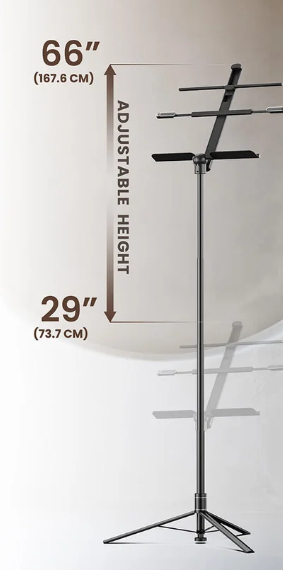
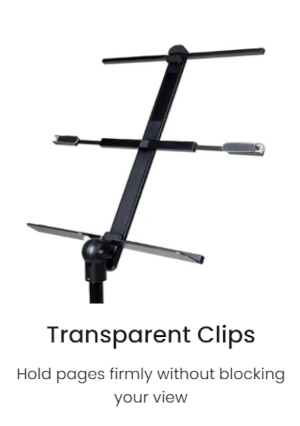
The two bars that hold the music are adjustable, and one has transparent clips so that you can see the music through the clips.
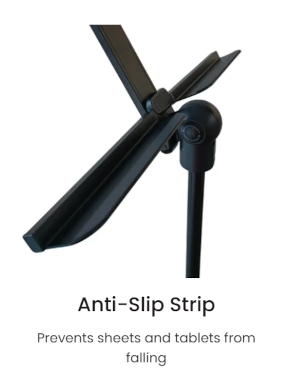
The music tray has a rubber anti-slip strip to help keep your music or tablet from slipping off the stand.
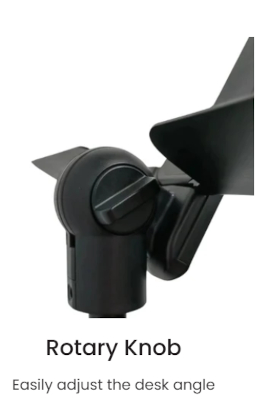
The tray has a knob so you can loosen it and adjust the angle of the tray.
There is an optional light called the Lumi Light that screws onto the top of the tray. This light shines a wide strip of light onto your music. This Lumi Light is so much better than any clip-on lights that I’ve used.

The optional Flexy Mount screws onto the bottom of the tray. It beautifully holds my iPhone so I can see the metronome while I play. It will also expand to hold my 8½-inch iPad, as long as I take the iPad out of its case.

They also make a carry case that has four pockets. One for the music stand and three for the gadgets.
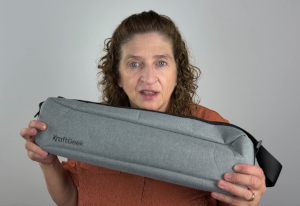
I’ve owned a few portable stands over the years. None come close to the KraftGeek Capsule!
If you’d like to check it out, follow the link and use my code DOCTORFLUTE for a 15% discount.
Online Store: https://tinyurl.com/4werjsdb
10% Discount Code: DOCTORFLUTE
Amazon Link: https://bit.ly/3SgJrjo
Have fun!
DoctorFlute
KraftGeek Capsule Music Stand Review by DoctorFlute

Woodify Ring for Flute Review by DoctorFlute – FCNY Sponsored

To LefreQue or Not to LefreQue. That is the Question. Can You Hear the Difference?

How To Attach a LefreQue to Your Flute

The post KraftGeek Capsule Music Stand Review by DoctorFlute appeared first on DoctorFlute.
]]>The post LefreQue – Results of Testing 4 LefreQue on 3 Levels of Flute appeared first on DoctorFlute.
]]>As you may already know, in July of 2018, I conducted my very first test of the LefreQue by playing my professional Haynes with a Rose Gold LefreQue and then a Silver LefreQue. The resulting blog and video of this test included a blind test and became one of my most viewed videos. Additionally, this test spurred a lot of questions and comments about the LefreQue from the simplest of questions desiring to know the correct pronunciation of this musical accessory, to the most cynical charge that it is nothing more than the proverbial snake oil.
At the end of that test, I was not certain that the LefreQue improved my tone and increased the ease of performance in the way that the inventor suggested. But I knew it did do something positive for me.
So, this time around, I wanted to dive a little deeper by demonstrating how the LefreQue Sound Bridge can actually change the sound (and feel) of 3 levels of flute; to answer some of the most commonly asked questions that I have gotten about the LefreQue; and to include some details about an independent test conducted by a peer-reviewed scientific journal.
Will this finally put to rest the question of whether or not YOU should get a LefreQue because it is THE solution that you have been searching for to improve your tone? Of course not! But what I can say with certainty is that if you get the correct LefreQue for your instrument, and attach it correctly, that it will in fact do for you – at least some of – what the inventor claims it will do. That is, in many ways it will improve your sound, and make it easier for you to play, especially the high notes and low notes.
The real question, that only you can answer is whether you like what it does for your sound. And whether the cost is worth it for you. It all comes down to preference. Do you prefer your sound with a LefreQue or without a LefreQue? I do hope that you will test them out and let me know your results.
In my opinion, if you have outgrown the flute you own, and cannot afford to upgrade your flute or headjoint, then a LefreQue is a much more economical option to extend the life of your instrument by helping you to produce a better tone and to have more enjoyment from performing. That is, the intermediate player stuck on a beginner flute, or the music school candidate looking for an edge with their intermediate flute would do well to look at the LefreQue.
Promises Made
The LefreQue is composed of two small pieces of metal that are bent in such a way to produce a small hump that “bridges” the lip between the segments of the flute: flute body and headjoint, body and foot, headjoint and crown. The LefreQue is designed to overcome the acoustical impact of these segments by allowing the tone to move with less resistance through the flute.
LefreQue promises you will achieve the following:
• Purer overtones
• Accurate tuning
• Clear response
• Smooth intervals
• Surround projection
• Extended dynamics
Promises Kept
On June 12, 2021, an independent article was published in “Acoustics” which is a peer-reviewed journal of acoustics science and engineering. This article is helpful in that it validates that the LefreQue Sound Bridge actually has an acoustical impact on the sound produced. It also describes the claims made by performers and conductors. Further, it provides an excellent definition of how the thing works.
Here is their definition, followed by a heavily edited quote about their results, and a link to the article for those who wish the read the somewhat technical jargon. As of the publication of this blog post, that article has had over 1,700 views.
“It is shown that a gold-plated device mounted… can change two characteristics of the radiated sound… thus, being beneficial for live performances in small halls with minimal acoustic optimization. The data further indicate that the occasionally hearable “rumble” [from playing out of tune with each other] of a wind instrument orchestra… might be reduced (or avoided).”
“The general concept of the sound bridge is to facilitate the transfer of vibrational energy from one part of the instrument to the next connected part. It is assumed that, at the first loose connection between the mouthpiece and the body of the wind, a loss in the transfer of vibrational energy occurs, which can be reduced through the use of a metal bridge, which is designed to transfer vibrational energy.”
The Magnitude of the Frequency Jitter of Acoustic Waves Generated by Wind Instruments Is of Relevance for the Live Performance of Music
By Alexander M. Rehm
https://doi.org/10.3390/acoustics3020027
Commonly Asked Questions:
How do you pronounce LefreQue?
The correct pronunciation is “le freak” as in “the frequency.” Although the inventor is not offended if you pronounce it like the ogre named Shrek as in “le freck” as long as you buy one, you can call it whatever you want.
Where do you place the LefreQue on your flute?
You can place the LefreQue on any or all the 3 places on your flute where metal pieces connect:
1. Crown to Headjoint
2. Headjoint to body
3. Body to footjoint
It is most commonly placed between the headjoint and body. In this position, you can use either the 76mm LefreQue which will bridge both ridges at the top of the body, or the 41mm LefreQue which will only bride the topmost ridge.
Regardless of which position you choose, the LefreQue should be attached to the bottom of your flute where there are no keys above or below it. In addition to the acoustical benefits of this placement, it also gives your audience a perfect view of the LefreQue when you are in playing position.
What does the LefreQue cost?
That depends on which LefreQue you buy. They run from the very economical under $100 USD (Brass) to the very expensive $10,000 USD (24K Solid Gold), depending on their metal composition.
The inventor says that you need to select a metal that is above the quality of the metal of your instrument. So, you would not use an inexpensive LefreQue on a professional model flute because it probably would not give you the desired results.
The 4 LefreQue that I tested:
76mm Fine Silver Gold-Plated – $675
41mm Red Brass Rose Gold-Plated – $300
41mm Red Brass Silver-Plated – $110
41mm Red Brass – $65
The prices listed were at the time of this publication and are subject to change with the whims of the spot prices of precious metals.
Will the LefreQue scratch your flute?
The simple answer is that the LefreQue could scratch your flute. Therefore, you are prohibited from attaching a LefreQue to a flute that is on loan to you for a trial.
You want to be very careful when you attach it to your flute. You are more likely to scratch your flute if you move the LefreQue after you have already attached it to your flute. If you forgot to place it where there are no keys, then the trick to moving it without scratching is to hold your flute firmly by the handle, then with your thumb and index finger pull the LefreQue away from your flute – stretching the band slightly – then reposition the LefreQue and gently release the tension in the band. By doing it this way, you will not slide metal on metal. This is what causes the scratches.
So, just be careful and you will not scratch your flute.
Do flutist perform with the LefreQue on their flute?
Yes, definitely! Because if it does what you want it to do – enhances your tone, makes it easier to hit some notes, better tuning, etc. – then of course you would want to perform with it on your flute.
Does the LefreQue weigh your instrument down?
The LefreQue does add weight to your flute, especially if you use 2 or 3 at the same time. But the real questions are whether the added weight is enough to give you hand problems, and does it throw off the perfect balance of the flute.
So, if you already have hand problems, then any additional weight added to your instrument may exasperate those problems. Otherwise, I did not find that the added weight of even the 76mm LefreQue to add too much weight that I thought it might cause me any problems. Additionally, it did not seem to throw off the balance in the slightest way.
How do you attach a LefreQue?
It is actually quite simple to attach them, once you get the hang of it. I have written out the process and published a blog with photos and made 2 videos demonstrating how to attach them properly. I hope you find these helpful. Have no fear. You will figure it out!
The Trials
Here are the combination of flutes and LefreQue that I used in my trials, and my opinions about what I heard and felt when I played.
Professional Haynes with 76mm Fine Silver Gold-Plated LefreQue
I could definitely hear a difference! I feel like it took the edge off, the diffused edge of my tone, and gave me only the center. So, I do think that it gave me a better tone, a more focused sound. I also think that it gives me a little bit bigger sound. And I think that while you could say it made my tone smaller, I think what I heard is that this has given me just the pure tone, which then projects a whole lot better.
You do in fact feel a difference in the resonance. The flute feels different. The LefreQue takes some of the vibrations that go through the flute and dampens them a little bit. So, the flute feels different in your hands because of that dampening.
I did not find the weight of this to be overwhelming. It does not really feel like it throws the balance off. Which I was probably a little bit concerned about.
When I was playing with the high register and really doing some high B’s and high C’s, I do think it responded a lot easier. With my flute, I feel like I do have to work kind of hard in the third octave to really make it respond and sound good. This LefreQue made those notes come out easier for me.
Professional Haynes with 41mm Red Brass Silver-Plated LefreQue
So, I thought this was a nice improvement. I like what it did for my tone. It did not make it feel smaller at all. It definitely felt a little bit more refined. I thought it gave a warmer quality to my tone and I could definitely hear the focus it gave to my tone.
I am not sure that it gave my high register any real boost as far as tonguing or response goes. It might be better intonation.
Professional Haynes with 41mm Red Brass Rose Gold-Plated LefreQue
Again, I could hear a difference. I am not sure it was the most beneficial for my tone. I actually felt like my tone was cracking a little bit more than usual. But I do feel like it opened my lower register, and it gave me a little bit bigger sound.
It is an in interesting sound that is definitely different. But is it better? I’m not sure.
Haynes Amadeus Intermediate with 41mm Red Brass Silver-Plated LefreQue
I think it really did add something to this instrument. It gave me a little bit more projection. I really did hear that. I felt like the sound really projected differently on this instrument. It also felt different in my hands – just like it did with the professional model flute.
I am not sure that it did anything in particular for the low register, other than generally overall I thought the tone changed.
Haynes Amadeus Intermediate with 41mm Red Brass Rose Gold-Plated LefreQue
I thought that this one really does something completely different with my tone. I felt like it warmed the tone up. But also, I felt like the response time is a little bit quicker in the low register and the high register.
So, to me there is a big difference in how this LefreQue sounds on this intermediate flute.
Trevor James Beginner with Red Brass LefreQue
I did hear a difference. I think that even this red brass takes off some of the edges that are a little bit more diffused and gives a more solid sound in the middle. So, I think that this is an improvement. And if you have a beginner flute and you don’t have the funds to upgrade right now, a less than $100 fix can give you a nice change that I think you would really appreciate.
Trevor James Beginner with Red Brass Silver-Plated LefreQue
I definitely heard a bigger sound. I think that this flute is projecting more too. It not only took off the edges like the red brass did, but it gave me a little bit more sound.
This could be a good solution for an intermediate player, playing a beginner flute. An economical solution that can extend the life of your beginner flute.
Trevor James Beginner with Red Brass Rose Gold-Plated LefreQue
This one gave me a totally different tone color! The Rose Gold seemed to sweeten up my tone. It still improved the projection. But it also gave me a little sweeter sound.
I really felt like the gold made a difference. And going from the brass to the silver plated to the gold plated, really three different sounds, three different price points – all economical choices to help you get the tone you’re looking for.
But for me, playing on this beginner flute, if I were to choose, I would go with the gold.
Conclusion
Now you might take the LefreQue off your flute and decide that you like your tone better without the LefreQue. That is perfectly fine and acceptable.
While my test showed me that the LefreQue does actually make a difference in my tone, I still think that the bottom line is preference.
Do you like your sound better with the LefreQue or without the LefreQue?
Do you find it easier to play your high and low registers with the LefreQue or without the LefreQue?
Do you like the way your flute looks and feels with the LefreQue or without the LefreQue?
If you can answer these questions, they will help you decide whether to buy them. In my opinion, they present an economical choice to improve your sound.
Let me know what you decide!
Have fun!
DoctorFlute
Watch my video demonstrating all these different LefreQue and let me know what you hear. Do you hear differences? If so, are they positive, negative, or neither?
LefreQue for Flute Testing 4 LefreQue on 3 Flute Levels – FCNY Sponsored

How to Attach a LefreQue to Your Flute

To LefreQue or Not to LefreQue. That is the Question. Can You Hear the Difference?
How to Attach a LefreQue to Your Flute Close Up

Woodify Ring for Flute Review by DoctorFlute – FCNY Sponsored
KraftGeek Capsule Music Stand Review by DoctorFlute
Here’s a list of the gear tested in this video:
William S. Haynes Handmade Custom Flute – Solid silver, hand-cut headjoint with 14K gold riser, silver body and mechanism, .016” standard wall tubing, inline G, B footjoint.
Haynes Handmade Custom Flute in Coin Silver – New
Amadeus by William S. Haynes Model 580 – Haynes Amadeus silver-plated headjoint with sterling silver (.925) lip plate and riser, silver-plated body and mechanism, drawn tone holes, French (open hole) model, pointed key arms, (.016″) tubing, offset G, B footjoint.
Amadeus by Haynes Model 580 Step-Up Flute – New
Trevor James Model 10X – silver-plated straight headjoint, body and mechanism, closed holes, C footjoint, offset G key, Pisoni Lucien Deluxe pads.
76mm Yellow Gold-Plated Solid Silver Lefreque Sound Bridge
76mm Yellow Gold-Plated Solid Silver Lefreque Sound Bridge
41mm Rose Gold-Plated Red Brass Lefreque Sound Bridge
Gold-Plated Red Brass LefreQue Sound Bridge with Band
41mm Silver-Plated Red Brass Lefreque Sound Bridge
41mm Silver-Plated Red Brass Lefreque Sound Bridge
41mm Red Brass Lefreque Sound Bridge
41mm Red Brass Lefreque Sound Bridge
If you follow these links to The Flute Center of NY, tell them I sent you by putting my code: “DrFlute” in the box labeled “Influencer Code.”
Thanks!
Thank you, Flute Center of New York, for sponsoring this video.
The post LefreQue – Results of Testing 4 LefreQue on 3 Levels of Flute appeared first on DoctorFlute.
]]>All 3 rings noticeably changed the sound of the flute and produced different sounds than the other rings.
But do they measure up to the manufacturer's promises?
The post Would You Woodify? appeared first on DoctorFlute.
]]>The Woodify Sound Ring is a clever invention by Alessandro Baticci – flautist, composer, and CEO of Woodify. Aptly named, the Woodify Ring is a ring of precision cut and shaped wood which encircles the headjoint, close to the flute body, and is gently tightened by hand with a simple twist screw.
 But don’t let the simplicity of this elegant little “sound solution” fool you. It clearly changes the sound of the flute. But does it deliver on its big promises?
Big Promises
Woodify claims to improve the sound of your instrument as follows:
- Add colors & depth to your tone
- Enhances your sound
- Increases your projection
- Increases the resistance of your headjoint
- Dampens vibrations, minimizing the loss of energy
- Centers your tone
- Focuses the sound
- Intensifies the harmonics of the flute sound
- Reduces the characteristic air noise
- Gain greater sound volume
- Darkens your tone
- Focuses your staccato
So, what do you think? Have you tried the Woodify Ring for Flute?
I made a video of myself testing 3 different Woodify Rings: Cherry Wood, Walnut, and Beech Wood. You can watch me try each ring for the first time and see my response in real-time.

Professional Model Demo
All 3 rings noticeably changed the sound of the flute and produced different sounds than the other rings. One would think that this is because the rings are made of different woods and thus interact with the flute differently. In fact, at the Woodify website, you select your instrument type first – silver flutes, gold flutes, lows flutes – then select the type of wood that the Woodify Ring is made from.
For my demonstration, I used a solid silver professional model Haynes (see full description below) and tried out the 3 different Woodify Rings recommended for silver flutes: Cherry Wood, Walnut, and Beech Wood.
Here’s my observations after my first trial:
Cherry Wood:
My sound is brighter, but not the richer sound I am usually looking for. It did focus my sound, as if it took out a bit of the airy edges and gave me only the pure sound. My upper register is a little bit darker. My staccato is more focused!
Walnut:
This Woodify Ring immediately gave me the WOW factor. It definitely darkened my tone! I like this effect because I think my tone is on the brighter side and I like something that gives me a darker sound. This is why on my own professional model Haynes flute I have a 14-carat gold riser. It darkens the sound a bit.
The walnut Woodify also removed some vibrations. I could feel the difference.
Beech Wood:
This Woodify Ring clearly sounds different than the other two, and different from no Woodify on the flute. This one makes my tone sound smaller, but edgier! And I kind of like that edgier sound.
The sound is focused immediately. You can tell playing staccato in the low register. It speaks easier. The low register speaks amazingly!
Woodify Wins My Vote
In summary, the Woodify Ring is a winner. I think they definitely improve your tone in the way that the Woodify maker says. So, if you want a simple way to improve your tone, get a Woodify Ring for Flute.
I will be asking for the Walnut Woodify for Christmas this year!
Have fun!
DoctorFlute
Here is the flute & headjoint demonstrated in this video:
If you follow these links to The Flute Center of NY, tell them I sent you by putting my code: “DrFlute” in the box labeled “Influencer Code.”
Thanks!
William S. Haynes Custom Handmade Silver Flute
All silver tubing, mechanism, tone holes, rings, ribs, and posts; lightweight pinless mechanism, soldered tone holes, French (open hole) model, pointed style key arms, gold springs, .016” standard wall tubing, inline G key, split-E mechanism, C# trill key, D# roller, and B footjoint. Handmade in USA.
flutecenter.com/products/william-s-haynes-handmade-flute-in-sterling-silver-soldered-tone-holes
Haynes Silver Handcut Headjoint – Coin Silver Tubing, Silver Lip Plate and riser, .016” standard wall tubing, Piedmont cut headjoint. Handmade in USA.
flutecenter.com/collections/customfl-haynes-headjoints
Watch my reactions as I try each Woodify for the first time:
Woodify Ring for Flute Review by DoctorFlute – FCNY Sponsored
KraftGeek Capsule Music Stand Review by DoctorFlute
To LefreQue or Not to LefreQue. That is the Question. Can You Hear the Difference?
What Do Gold Springs Do for Your Flute?

The post Would You Woodify? appeared first on DoctorFlute.
]]>The post How to Attach a LefreQue to Your Flute appeared first on DoctorFlute.
]]>The LefreQue consists of 2 metal plates, and 1 elastic band that has a small ball built into it.


To attached the LefreQue to your flute, place the plate without dots in the palm of your left hand, perpendicular to your fingers. Then place the plate WITH dots on top of the plate without dots.
Then place the elastic band on top of both plates with the ball extended toward your fingers.

Then with your right hand pick up both plates by placing your right thumb between the band and the plates, and your right middle finger between the plates and the ball on the band.

Pick up the plates with your right hand and turn them over, while gently squeezing the band together between your index, middle and ring fingers. Then, gently pull the ball so that the extra length of band is on the ball side of the plates.

With your left hand, turn your flute (while on the flute stand) so the lip plate faces away from you exposing the bottom of the flute. You will attach the LefreQue directly above the place in the flute body where there are no keys.

With your right hand, place the LefreQue on your flute so that the top edge of the LefreQue is at the base of your headjoint, the bottom edge of the LefreQue is on the flute body, and the curved part of the LefreQue goes over the raised seam at the tip of the flute body.


Then with your left thumb and index finger pinch the band while simultaneously pulling the ball with your left middle finger. The idea is to pull the band over the ball and drop it down behind the ball forming a tight hold on the two plates.


If you need to adjust the position of the LefreQue to move it to where there are no keys, first hold the flute body just below the headjoint and LefreQue. With your free hand, pinch both plates and pull them away from your flute, then turn them to the correct position. This will keep them from scratching your flute. That is, if you just turn the LefreQue while it is tightly attached to your flute, you will likely scratch your flute.

The LefreQue should be positioned away from your face, starting on the outer edge of the lip plate. When you look down your flute, the LefreQue plates are not in line with any keys. They are more in line with open metal.
To remove the LefreQue just reverse the process by pulling the elastic band back over the ball to loosen the plates. Be sure to have your hand securely on the LefreQue plates and elastic band. Otherwise, the plates may fall to the floor and the band may shoot across the room.
It really gets quite easy after you’ve done it a few times. You can watch me put one on for the first time in the videos linked below.
Have fun!
Doctor Flute
How to Attach a LefreQue to Your Flute

How to Attach a LefreQue to Your Flute Close Up

To LefreQue or Not to LefreQue That is the Question Can You Hear the Difference

LefreQue for Flute Testing 4 LefreQue on 3 Flute Levels – FCNY Sponsored
The post How to Attach a LefreQue to Your Flute appeared first on DoctorFlute.
]]>The post To LefreQue or NOT to LefreQue That is the Question appeared first on DoctorFlute.
]]>Pronounced “le freak” by founder Hans Kuijt, LefreQue sound bridges claim to enhance the sound characteristics of wind instruments as follows:
- Purer overtones
- Better tuning
- Easier playing
- Better slurring
- Surround projection
- Extended dynamics
So, what do you think? Have you tried them?
A lot of people seem to have one of these sound bridges. So, popular opinion seems to approve. However, I’ve heard these benefits described as the placebo effect. That is, you believe that you WILL sound better using the LefreQue so, when you use them, you THINK you did sound better.

So, should you spend the money for a LefreQue? It isn’t chump change to buy one of these engineering marvels. On the other hand, buying the gold LefreQue would be much cheaper than buying a new headjoint. If you’re looking for a new sound, you may want to consider a LefreQue sound bridge.
In my experimentation with the LefreQue, I found that the sound is different. But my question (still undecided) is: is the sound better, or is it just a preference? I made a video of me trying the LefreQue for the very first time on my flute (Haynes solid silver, 14-karat gold riser). I played with a rose gold LefreQue, a silver LefreQue, and no LefreQue. I told you what I heard. Then I ended with a blind test to see if you could tell the difference. Take a listen and let me know what you think. (The blind test begins at 11 minutes.) The consensus so far is that there is a clear difference between the 3 examples. But the question remains – is it better or just different.
The more I played with the bridges the more differences I heard. I do think that one needs to play around with them to use them to best advantage. The articulated response time was an area where I do think there was the biggest difference. I felt that the tongue/sound response was quick and clear.
If that is the case, I’m all in!
I also wonder if the sound itself is packaged with more clarity. If that is the case, I’m all in! What often happens, with me anyway, is when I play a new flute or headjoint, I think that it sounds really phenomenal. But then when I go back to my flute: viola! the great sound is there as well. This makes me come down on the side of the placebo effect. I do think that recording yourself is very helpful. It gives you a more unbiased view of the situation. You can hear the tone as someone else would hear it, not as it echoes through your sinuses and to your ears. This gives you such a new perspective. I also find it helpful to ask opinions of other flutists when I try new instruments (or sound bridges). It helps to listen to others opinions about what they heard. Of course in today’s world, if you don’t have anyone to listen you, you do have a recording device at your fingertips.
 When you try the LefreQue one of the most important aspects to get the correct sound is to put it on correctly. The design engineer suggests that the bridge needs to be attached from headjoint to body where there are no keys. I have seen many a video of a flutist with the bridge attached incorrectly. (To help with this process I wrote a blog and made 2 videos about how to attach the LefreQue to your flute properly.) I think that the promises of the designer are not fully in effect when the bridge is incorrectly applied.
A possible drawback to adding a LefreQue to your flute is the added weight. Obviously, for many people this is not an issue. But for some, the weight could add to an already existing hand problem. If you are one of these people, the added weight is enough to give you pause. So, I would try to get a trial period where you could find out whether or not this was a good addition to your flute.
What Do You Hear?
 When I played my flute with the added sound bridge, I thought that the tone got moving faster or the vibrations occurred quicker. This made me feel that my tone was a bit bigger and that it spoke easier. The gold LefreQue made my low register tone color quite different. It also gave me an edgier sound. I can think of a number of solos that could use this extra edge.
In the end I do think that the LefreQue made a difference to my sound and for the savings of buying a new headjoint, it might be worth the investment.
Take a listen to the video and see what you think about these bridges. I think the LefreQue sound bridge is something to explore. Since every flute is different, it’s worth trying these to see what they can do for you. They may give you the new sound that you’re looking for.
I didn’t have time to explore the intonation, dynamics and tone color claims. It would be interesting to play with these in front of a tuner.
Try these on your own and see what they do for you. Hey it is cheaper the a new flute!
Have fun!
Doctor Flute
Watch me demonstrate this: To LefreQue or Not to LefreQue. That is the Question. Can You Hear the Difference?
How To Attach a LefreQue to Your Flute
How To Attach a LefreQue to Your Flute Closeup

LefreQue for Flute Testing 4 LefreQue on 3 Flute Levels – FCNY Sponsored
The post To LefreQue or NOT to LefreQue That is the Question appeared first on DoctorFlute.
]]>The post Flutes Through the Years appeared first on DoctorFlute.
]]>
When I began flute lessons at school in 4th grade, my Dad was the high school band director. He got me a Gemeinhardt from the schools assortment of instruments. I called it my “Gemmyhart.” Who can say that name when you’re in elementary school? I mean really! But I loved that flute. I can still remember the brown case with white stitching (or what used to be white, now a shade of taupe). I think the interior was blue. But I’m not sure of that.
That flute took my a long way. It wasn’t standard at that time for everyone to have an intermediate flute with a B foot and open hole. It was quite acceptable to be in high school and play in the All-Counties and All-States with a beginner flute. I did look VERY enviously at anyone who had an intermediate flute. Those open holes man did they look exciting. But my Dad was a teacher, my mom worked sometimes and other times was home with us.There were four kids and no extra money for fancy flutes. But, I also had made it clear that while I liked the field of music, it wasn’t for me, that was the family business,
I was going to be a veterinarian not a musician.
 I fought the my fate for all my years of high school and surrendered when I was a senior in high school when I finally got private lessons. My parents got me to take lessons from Georgetta Maiolo who was teaching at Ithaca College and Binghamton University where she still is today. Well I took flute more seriously from this point on. I auditioned for a small college in Western NY and took my Gemeinhart with me. It was in my second year when it became very apparent that I couldn’t compete with a beginner flute so my parents found a used Armstrong that had the longed for open hole with a B foot.
Oh man did I think it was great. I thought I had arrived in the flute world except that my nemesis at college had the enviable flute – she had a professional hand made flute. (I’m talking about you Martha!) I was always one step behind! It was okay, although jealousy reared its ugly head only from time to time. The rest of the time I was just excited that I now had a real flute. Then came senior year of college and the senior recital and auditions for grad school. It wasn’t a given at that time that you would and should go to grad school. So, I researched grad schools on my own but decided that I wanted to study with Georgetta Maiolo. That meant either BU or IC. I got into both with assistantship. But what swayed me to go to BU was that they waived tuition and paid besides. The one hitch is that I was told I had to have a professional model flute.
Great news! Now I had to get a top-of-the-line flute. Whoo hooo!
Georgetta had a guy. You know THE GUY that dealt in flutes and repaired them. I went somewhere in NJ, no recollection where at this point. Hey, I didn’t do the driving and I probably read the whole way. A flute was pretty much chosen for me before I got there. That was fine, what did I know of picking out a flute. If my teacher thought this one was good then it was good. Oh man it was beautiful. All solid silver and smooth as silk. Oh it was a wonderful day. I loved this flute. It was my first solid silver and it took a while to get the sound out of it that it could give me. This beloved flute was a Haynes, Deveau scale. I was even thrilled with the case because up to now I just had a flute with one of those built in handles and now this was just a case with the out case cover. Now was my time!
 This flute stayed with me a long time. It got me through an MM, through teaching public school for a few years, through a DMA at Eastman, through interviewing and playing for a professorship and auditions for a principle position in an orchestra. I used this flute until Thanksgiving the year 1999. I thought that It was time for a new instrument. I had changed as a player through all that time and now I needed flute that reflected my new time in life.
I called a dealer and made an appointment to go to Queens, New York City.
That was some experience. The dealer had many flutes out and I went back and fourth for hours and narrowed it down to a Haynes, a Powell, and a Muramatsu. They were all beautiful and I thought that I was ready to move to a different flute maker, that I was done with Haynes and it was time to move on.
But in the end I couldn’t get away from my first love. I fell in love with a Haynes and that’s what I play today. Now, I know that I would have been happy with any of those choices. However, the Haynes just fit my hands and I couldn’t put it down.
It’s a beautiful thing.
So whats your flute story? Do you change often or have you purchased one flute and it’s your baby until death-do-you-part?
Doctor Flute
The post Flutes Through the Years appeared first on DoctorFlute.
]]>The post The Gig Bag appeared first on DoctorFlute.
]]>My gig bag is my friend. It has been with me a long time. It was with me before children came along. In fact it was with me before I met my husband.
Actually it was with me long before I met my husband. And he’s not even jealous. He loves that bag as much as I do. Wait, I might be jealous.

I remember exactly when I got this bag. It was at the very first flute convention that I every attended. This convention was held in Boston, MA in the early 1990s and was absolutely magical. I was invited to go with my good friend Martha and we went as two young flutists just out of grad school and we had a blast.
It was wonderful to hear so many inspiring flutists and new music. I was still caught up in the music of the past and hadn’t really had a good introduction to 20c music. The first piece that I heard in the newly composed recital was Lowell Lieberman’s Sonata.

Both Martha and I bought that music and took it home to learn. In fact I used that sonata in my next audition for my DMA.
Another wonderful purchase at this convention was my Brannen piccolo.
At this point going through college and grad school I never owned a piccolo. In fact, I thought I didn’t like piccolo. It was there at the convention finally playing a quality piccolo that I realized a piccolo could actually sound warm and beautiful. It’s still with me today.
But the item that I purchased at that same convention,which has seen the most action is my flute bag. My friend Martha advised me to pick a bag that protected the music as well as the instrument(s) in your bag. She was much more experienced then I in picking a flute bag. She found that in the usual flute bag which had a place to put your flute and piccolo and another section for music, that the music in these bags tends to get dog eared from the corners always being pressed and folded down.
So, I looked for a bag that had a stiff divider in the music section to keep the music flat and protected. I have never regretted that choice one iota. I was able to pick out the material that I wanted and then they sewed it up and mailed it back to me. Sadly, the company that made my bag is no longer in business.
I never felt more like a flutist then when I finally had a professional flute bag. And I have loved it since. There have been a few times over the intervening years that I thought maybe I ought to try the backpack type of bag or maybe just carrying the music separate and using a flute case like a FluterScooter bag or the cool Weisman cases.
In the end though I would rather use my tried-and-true bag, even though it’s a bit long-in-the-tooth and tired looking.
Until it falls apart, you will see me walking to gigs and lessons using my gig bag. It will be with me until it’s long extended and beautiful end.
What’s your favorite gig bag?
Dr. Flute
The post The Gig Bag appeared first on DoctorFlute.
]]>